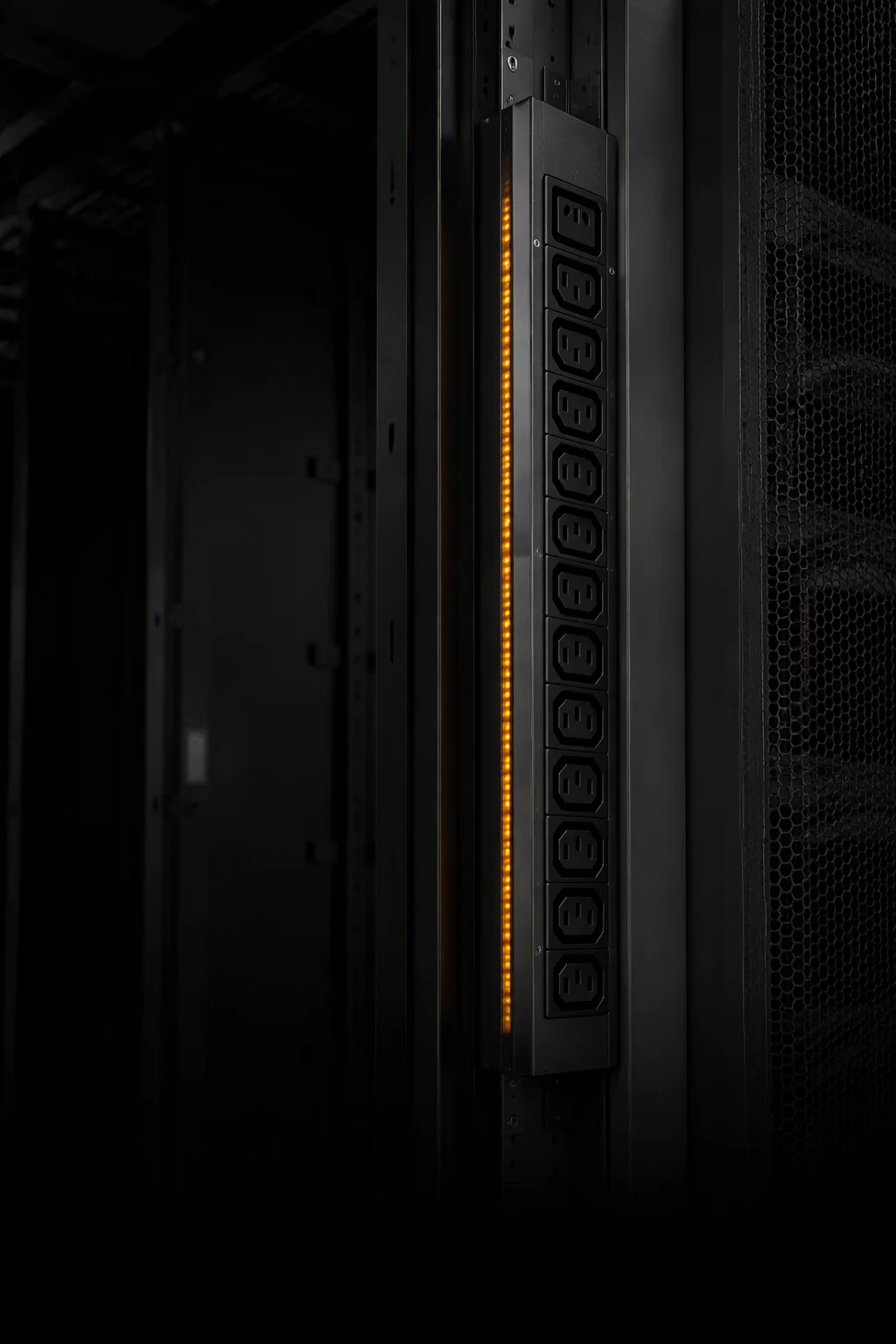
Industries · Edge Computing & Micro DC
Power Control for Racks Nobody Visits
Edge sites live in retail back rooms, cell corners and factory mezzanines — places with no operations desk. When a node locks up, the choice is a $600-1,200 truck roll or a switched PDU that cycles the outlet from your desk. We build the second option, with door and temperature sensors to cover the risks nobody sees coming.
Priced risk → remote control
The edge TCO math, and the hardware that changes it
Edge operators price risk into every node: the visit that may be needed, the cabinet that may be opened, the heat that may throttle a card. Those numbers come from published TCO models — and each one maps to a control an AmpRack PDU puts in your NMS.
| Operating pain | The number behind it | AmpRack answer |
|---|---|---|
| Nobody is on site when a device hangs | A single truck roll runs $600-1,200; at a 12% annual chance that is $144 of expected cost per node per year | Per-outlet on/off/reboot over SNMP and REST turns a power cycle into a 30-second remote action from the operations desk |
| Out-of-band access vanishes at the worst moment | 1,000 retail micro-DCs losing out-of-band management became a $600K single event at a $600 average per visit | One management IP daisy-chains up to 8 PDUs per site, and every outlet restores to a defined state after any reboot, so recovery never depends on staff arrival |
| Tampering and theft are priced, not hypothetical | Node loss is modeled at $4,000 per unit with a 1.5% yearly probability | A door sensor on the RJ12 port raises an SNMP trap the moment the rack door opens, timestamped into the event log |
| Heat degrades compute before anyone notices | At 55°C a cabinet can throttle NPUs by 70%, pushing latency from 15ms to 250ms with SLA exposure past $500K | Temperature and humidity probes alert on trend thresholds before the throttling curve starts bending your response times |
| Recovery windows are brutally short | Edge designs budget 180 seconds of control-plane loss before automated rollback fires | A hung node that survives soft recovery yields to a hard per-outlet power cut — no site visit, no ticket escalation |
| Street power is unreliable and unannounced | Brownouts and blackouts are routine at unattended sites | Programmable restore — last-state, all-on or all-off — with 0-999s staged delays brings a site back in a controlled order instead of one inrush |
| Cabinets are shallow and thin-fed | Edge racks commonly run 16-32A single-phase feeds in short cabinets | 0U verticals and short-body 1U models with 8-24 C13/C19 outlets fit both constraints — sizing help in the selection guides |
The economics of not driving
One avoided visit pays the difference
The switched grade exists for exactly this industry. Facilities teams model truck rolls honestly — $1,200 per visit in aggressive TCO models, $600 as the forgiving average — and a switched PDU removes the most common reason for the drive: a power-locked device that only needed its outlet cut and restored.
Recovery becomes a policy rather than a person. Outlets return to last-state after outages, staged delays keep inrush off a small UPS, and per-outlet current readback confirms the tower actually came back before anyone closes the ticket.
Field result: a retail chain running roughly 300 micro-DC sites cleared about 30 power-related truck rolls in its first year on switched units — call it $18,000 that never left the opex line at a $600 average per visit.
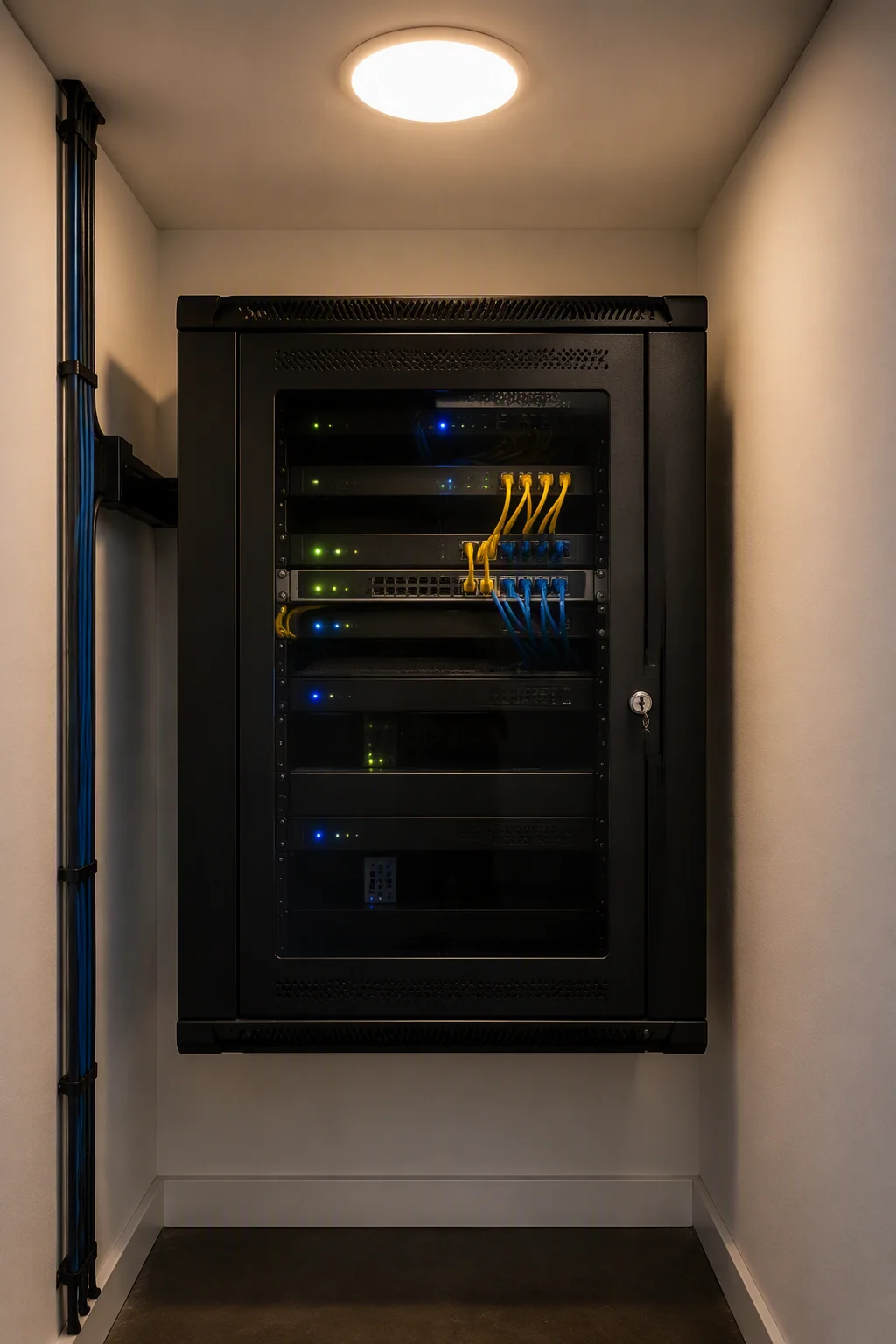
Questions from the field
Three questions edge teams ask first
You choose the policy per outlet or per unit: last state, all-on or all-off. A programmable delay of up to 999 seconds staggers the restart so the site UPS and feeder never see every device at once, and current readback verifies each outlet actually drew load afterwards.
Yes — up to eight PDUs daisy-chain on a single IP and share one management session; industry deployments elsewhere reach 16. For a two-cabinet micro-DC that means one switchport in your NMS covers the entire site's power, with no extra gateways to babysit.
Door, temperature and humidity cover the documented risks — tamper modeled at $4,000 per node, thermal throttling that starts around 55°C, and the moisture you cannot see until it corrodes. All four RJ12 sensor ports ship standard and alert by SNMP trap or email.
Price your next 50 sites properly.
Send the node count, feed size and reboot policy — an engineer replies with a unit proposal and FOB quote within 48 hours, sample units in 3-7 days.
Sources: Cloudatler Edge AI / Micro-DC TCO handbook (truck roll $600-1,200 at 12% yearly probability; $4,000 node loss at 1.5%; 55°C throttling to 70% with 15ms→250ms latency and $500K+ SLA exposure; 180-second control-plane budget); Rackmount Mart product listings (up to 16 PDUs per IP).