Selection Guides
Choose the PDU like an engineer
Every rack power spec comes down to six decisions: input standard, phase and current, outlet mix, metering grade, switching layer, then mounting and management. Work them in order and the part number writes itself — each step below links the product line that fits once you know your answer.
The selection path
Six decisions, in working order
Lock the input standard
Match the country and the building: IEC 60309 industrial plugs cover 16A, 32A and 63A with mis-plug-proof 6h clock keying, while NEMA lockups (L5-30, L6-30, L21-30) serve North American feeds. Racks under 16A can use a plain C20 wall inlet. The plug chart below maps every option we build.
Set phase and current
A 16A single-phase feed delivers roughly 3.7kW and a 32A feed about 7.4kW — enough for most enterprise racks. Three-phase WYE steps up to about 11kW at 16A, 22kW at 32A and up to 36kW per vertical at 63A, where dense and AI rows land. Dual-fed A/B racks should plan two PDUs from the start.
Plan the outlet mix
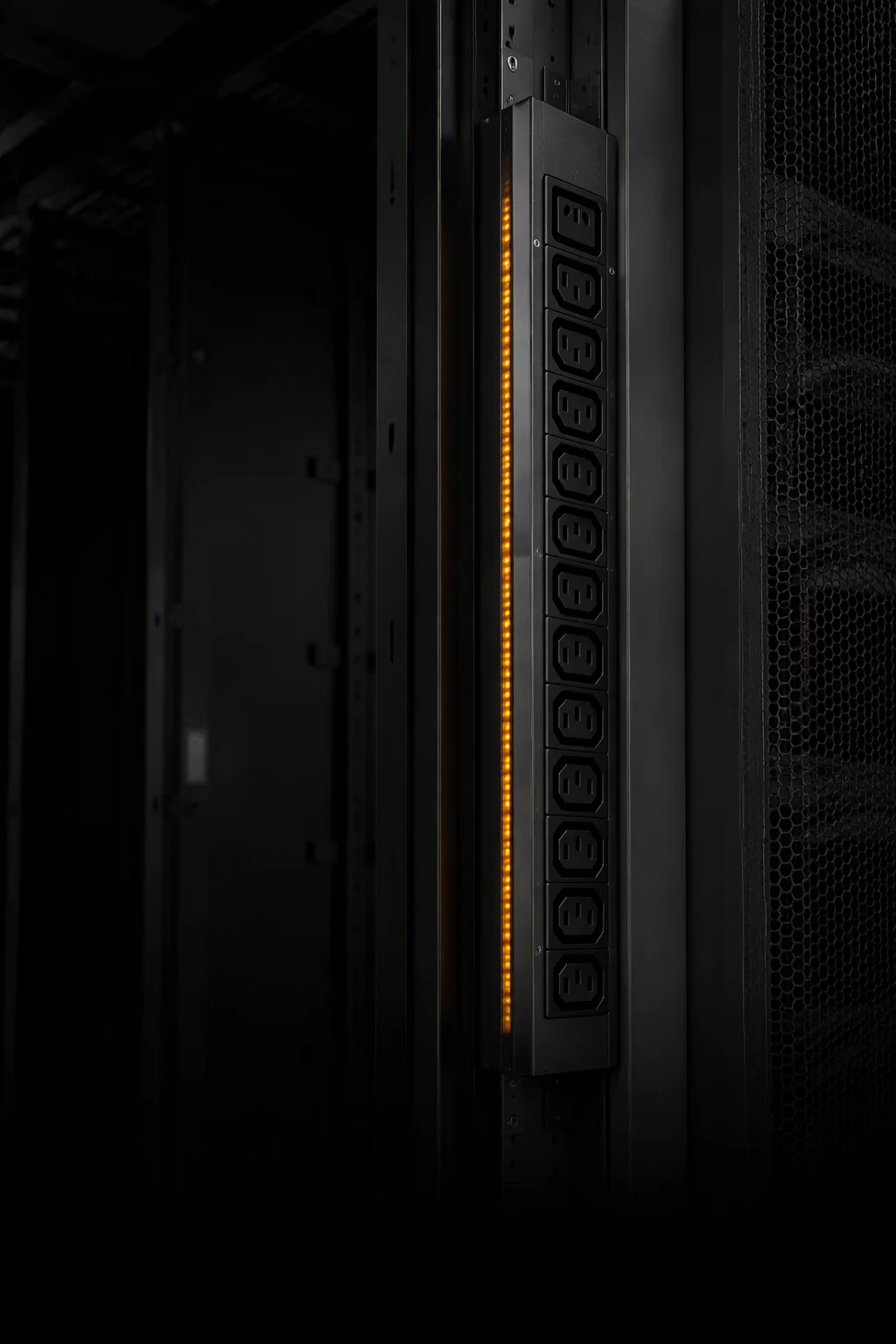
C13 handles devices up to 10A and C19 the 16A class such as blade chassis and storage shelves. Size the strip at equipment count plus 20-30% spare outlets, and pick locking variants where racks vibrate or get serviced often. Spacing and breaker grouping are confirmed free on our outlet-map drawings.
Pick the metering grade
No metering suits budget refits; input-level ±1% covers capacity planning and PUE work; per-outlet ±1% A / ±2% kWh with 15-minute settlement freezes is what tenant invoicing stands on. If money changes hands on the reading, it is an outlet-metered decision.
Decide the switching layer
If nobody stands next to the rack, per-outlet switching pays for itself: one avoided site visit saves $600-1,200. Switched units also sequence re-energizing in groups with 0-999s delays, protecting the feed from collective inrush after maintenance.
Fix mounting and management
0U vertical strips carry up to 48 outlets without spending rack units; 1U horizontal suits shallow and studio racks. Then set the management layer: daisy-chain up to 8 units per IP and match protocols — SNMP v3, REST, Modbus TCP, MQTT — to your DCIM, with sensors and anomaly detection where racks need eyes.
Input plug chart
IEC 60309 × NEMA — every input we build
| Connector | Poles | Voltage / phase | Keying / color | Approx. max feed | Typical use |
|---|---|---|---|---|---|
| IEC 60309 16A | 2P+E | 230V · 1φ | 6h · blue | ~3.7kW | EU single-phase enterprise racks |
| IEC 60309 32A | 2P+E | 230V · 1φ | 6h · blue | ~7.4kW | Dense single-phase rows |
| IEC 60309 63A | 2P+E | 230V · 1φ | 6h · blue | ~14.5kW | High-power single-phase feeds |
| IEC 60309 16A | 3P+N+E | 400V · 3φ WYE | 6h · red | ~11kW | Small three-phase cabinets |
| IEC 60309 32A | 3P+N+E | 400V · 3φ WYE | 6h · red | ~22kW | Colocation rows, dual-fed pairs |
| IEC 60309 63A | 3P+N+E | 400V · 3φ WYE | 6h · red | up to 36kW | AI / HPC high-density racks |
| NEMA L5-30P | 2P+E | 120V · 1φ | twist-lock | ~3.6kW | North American 120V racks |
| NEMA L6-30P | 2P+E | 240V · 1φ | twist-lock | ~7.2kW | NA 240V branch circuits |
| NEMA L21-30P | 3P+N+E | 208V · 3φ WYE | twist-lock | ~10.8kW | NA three-phase cabinets |
| IEC 60320 C20 inlet | 2P+E | 200-240V · 1φ | not keyed | ~3.5kW (16A cap) | Wall-input racks at 16A or less |
Feed figures assume rated voltage at continuous load; local code and derating rules always win. IEC 60309 6h clock keying color code: blue = 230V single-phase, red = 400V three-phase. Mismatched keying physically prevents the wrong plug entering the wrong feed.
From map to part number
Send the outlet list — we do the arithmetic
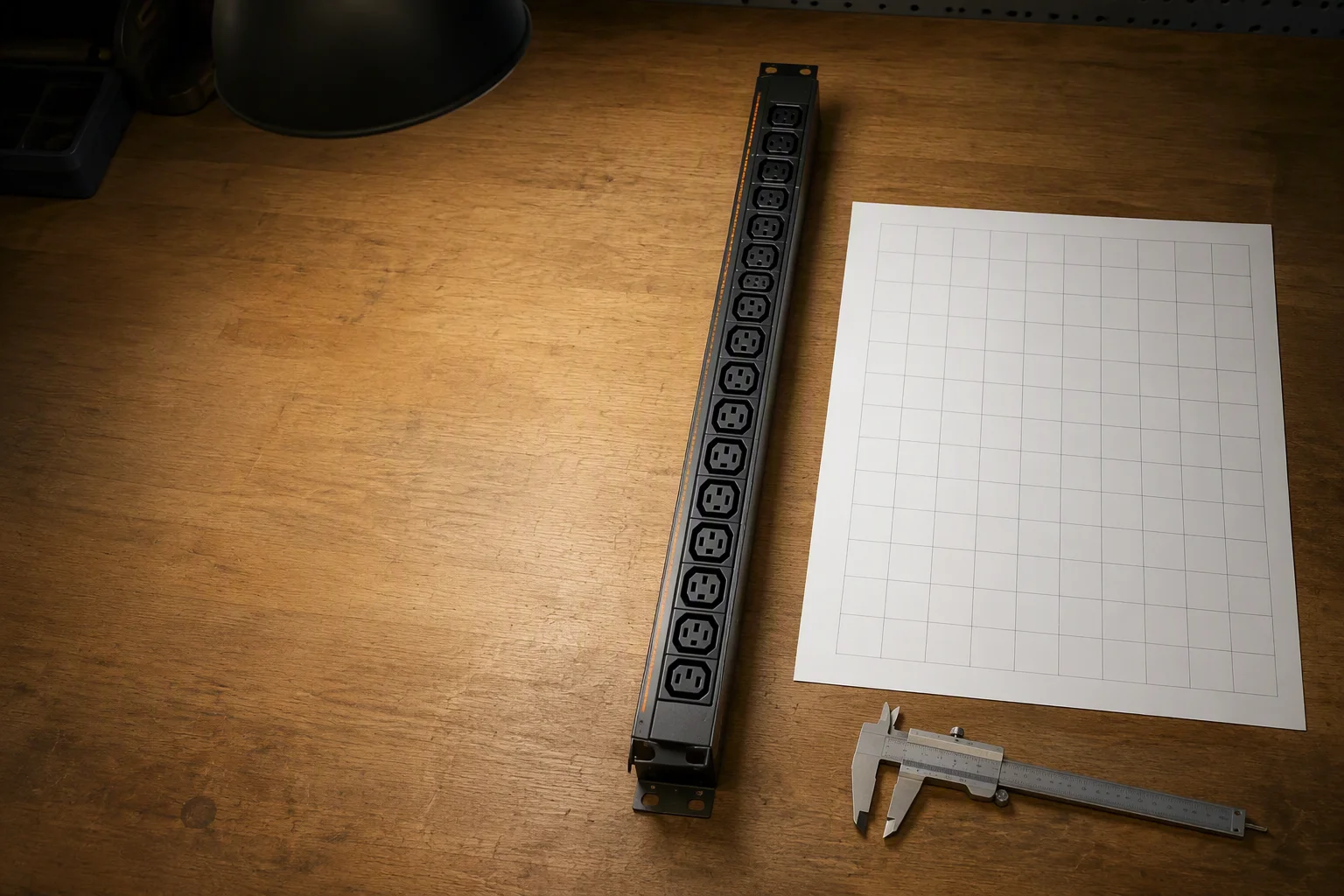
A selection needs four inputs and nothing exotic: your feed, your outlet schedule, the metering and switching grade, and a quantity. From those we return a dimensioned drawing with breaker grouping, cord gauge and an outlet map you can hold against the rack elevation — before any money moves.
Custom cord lengths of 1.5-3m, mixed C13/C19 layouts from 8 to 48 positions and regional plug ends are all first-article territory, not exceptions: configured samples ship in 3-7 days for bench approval, and the approved sample becomes the batch acceptance standard.
What to send for a same-week quote
- Input feed — plug standard, voltage, phaseFEED
- Outlet schedule — count, C13/C19 mix, locking or notOUTLETS
- Metering and switching grade — monitor, bill or rebootGRADE
- Quantity and schedule — pilot size, annual volume, on-site dateVOLUME
Grade comparison
Metered vs outlet-metered vs switched
| Capability | Metered | Outlet-Metered | Switched |
|---|---|---|---|
| Input metering, V/A/kW/kWh/PF at ±1% | Yes | Yes | Yes |
| Per-outlet metering | — | ±1% A · ±2% kWh | — |
| Per-outlet remote switching | — | — | Yes, 100k-cycle relays |
| Sequenced startup / recovery | — | — | 0-999s group delays |
| Tenant billing support | Unit-level chargeback | 15-min settlement freezes | Not for billing |
| Remote reboot of hung gear | Unit-level only | Unit-level only | Per-outlet |
| Best fit | Enterprise monitoring | Colocation billing | Edge / lights-out sites |
| FOB band, standard config | $120-260 | $260-500 | $200-450 |
| The line | Metered PDU | Outlet-Metered PDU | Switched PDU |
Asked at spec time
Three questions that settle most selections
Roughly at the feed: a 16A single-phase feed tops out near 3.7kW and a 32A feed near 7.4kW. Once a rack draws past about 8kW — or your rows run three-phase feeds anyway — a 32A or 63A three-phase WYE unit is the cleaner path, delivering up to 36kW from one vertical strip with better phase balance.
Count the equipment, then add 20-30% spare outlets for moves and refreshes — the standard headroom rule in capacity planning. C13 covers devices up to 10A and C19 the 16A class such as blade chassis and storage shelves; choose locking C13/C19 if racks get serviced often or vibrate.
1U horizontal is service-friendly and fits 8-16 outlets; 0U vertical mounts on the rear post channel and carries up to 48 outlets with breakers, without consuming rack units. High-density rows almost always end up 0U; labs and studios tend to stay 1U for reachability.
Go deeper — three guides from the blog
Metered vs Switched vs Outlet-Metered: How to Choose
A decision tree for the three monitoring grades — where billing, rebooting and budget each tip the choice.
Read the guide →What ±1% Billing-Grade Metering Actually Means
The IEC 62053-21 class 1 basis, the calibration chain behind it, and how 15-minute settlement values become invoices.
Read the guide →UL 62368-1 Explained: Why Your PDU Certificate Matters
The 60950-1 withdrawal timeline, the hazard-based engineering method, and a buyer's checklist for verifying certificates.
Read the guide →Spec still fuzzy? Bring us the rack, not the part number.
Send the feed, the outlet list and what the reading is for — an engineer replies within 48 hours with a drawing, a datasheet and FOB pricing.