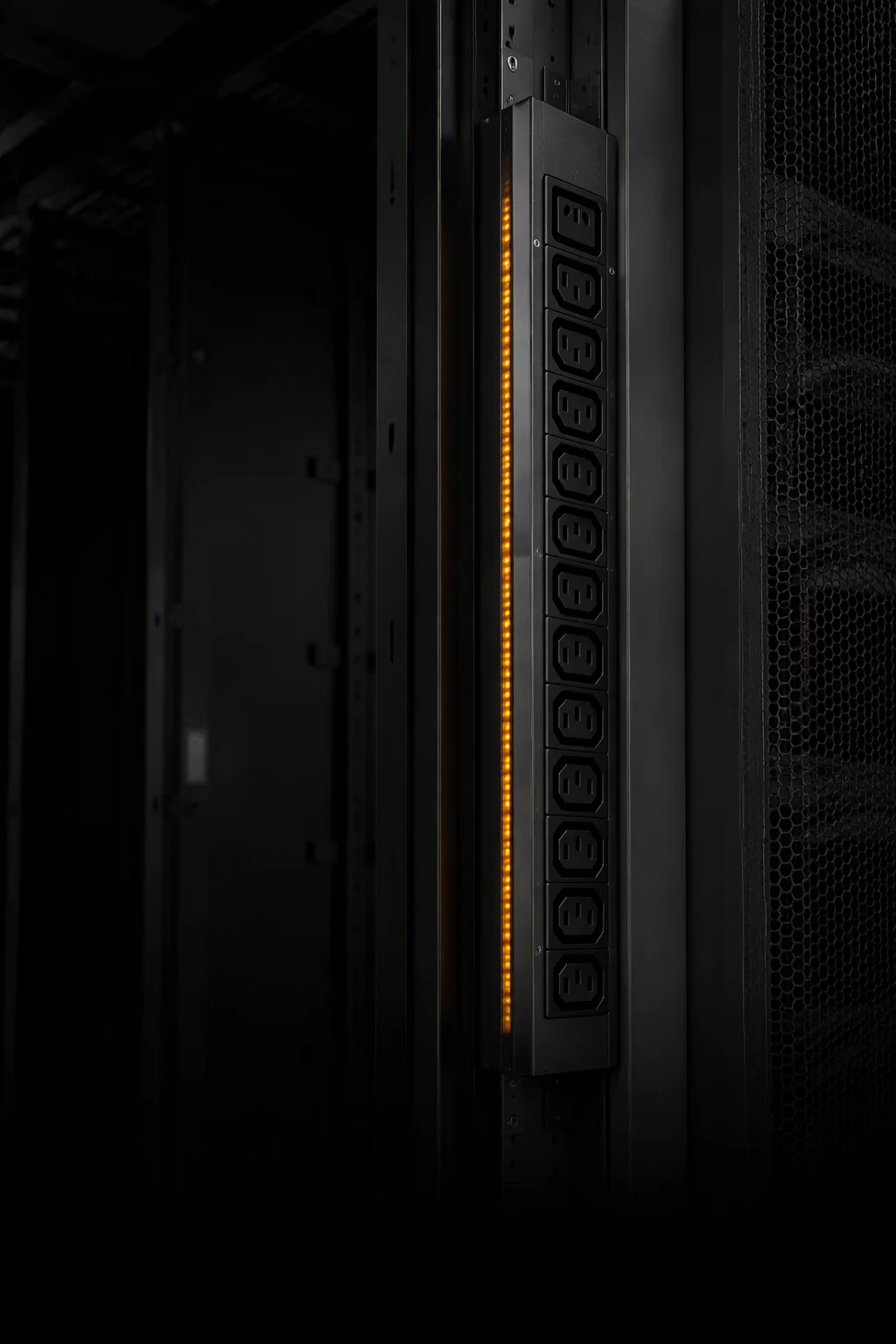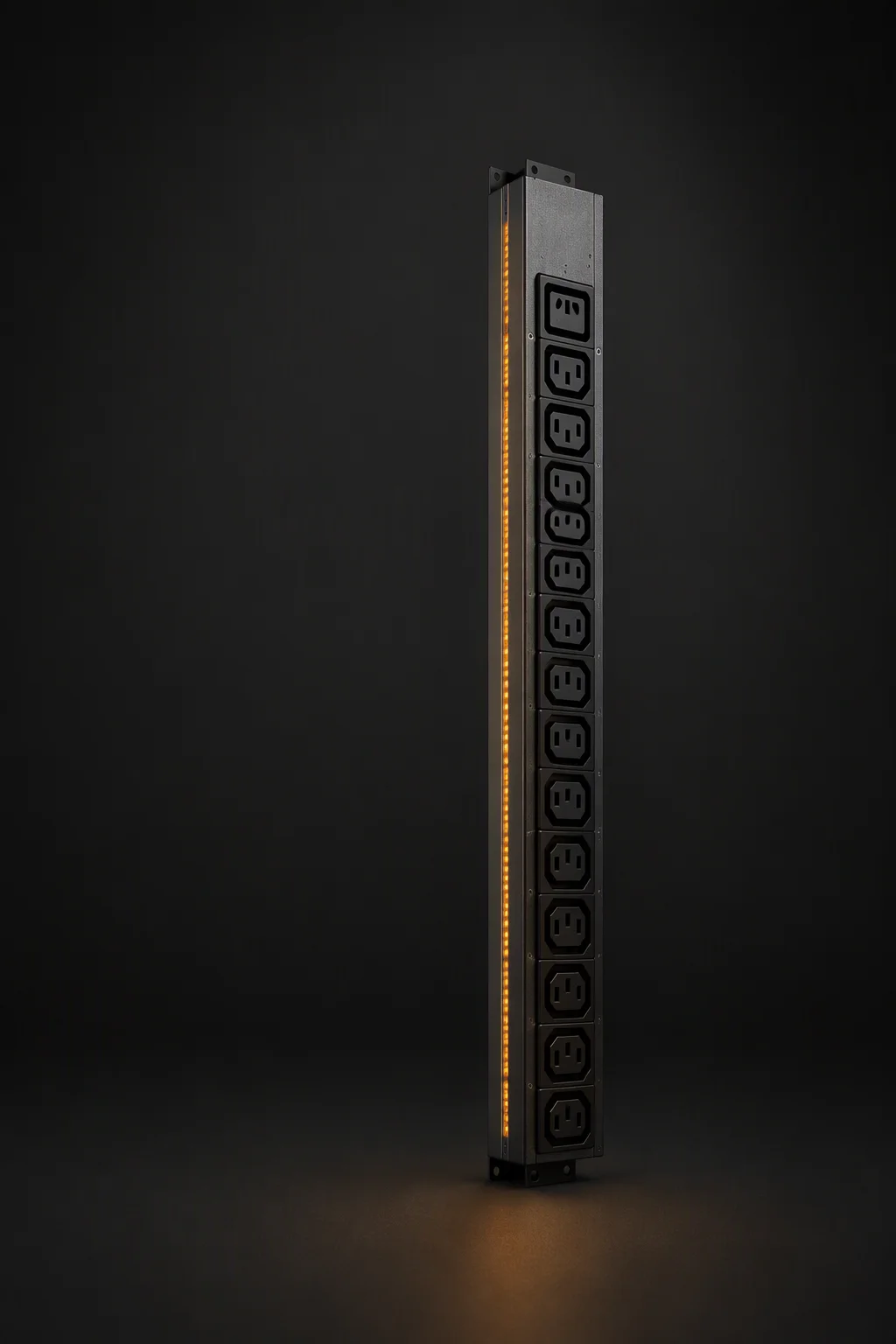
Switched PDU · S-Series
Reboot the rack from your desk.
Per-outlet on, off and power-cycle over SNMP v3 or REST, with 0-999s programmable sequencing and relays rated for 100,000 cycles — remote recovery for edge sites, branch closets and lights-out rows.
Why switched
A stuck server should not cost a van ride
One frozen edge box used to mean a truck roll at $600-1,200 per visit, plus every hour the site stays dark. A switched PDU cuts power to that one outlet for a few seconds and brings the device back — issued from your DCIM, logged with a timestamp, over before anyone grabs a coat.
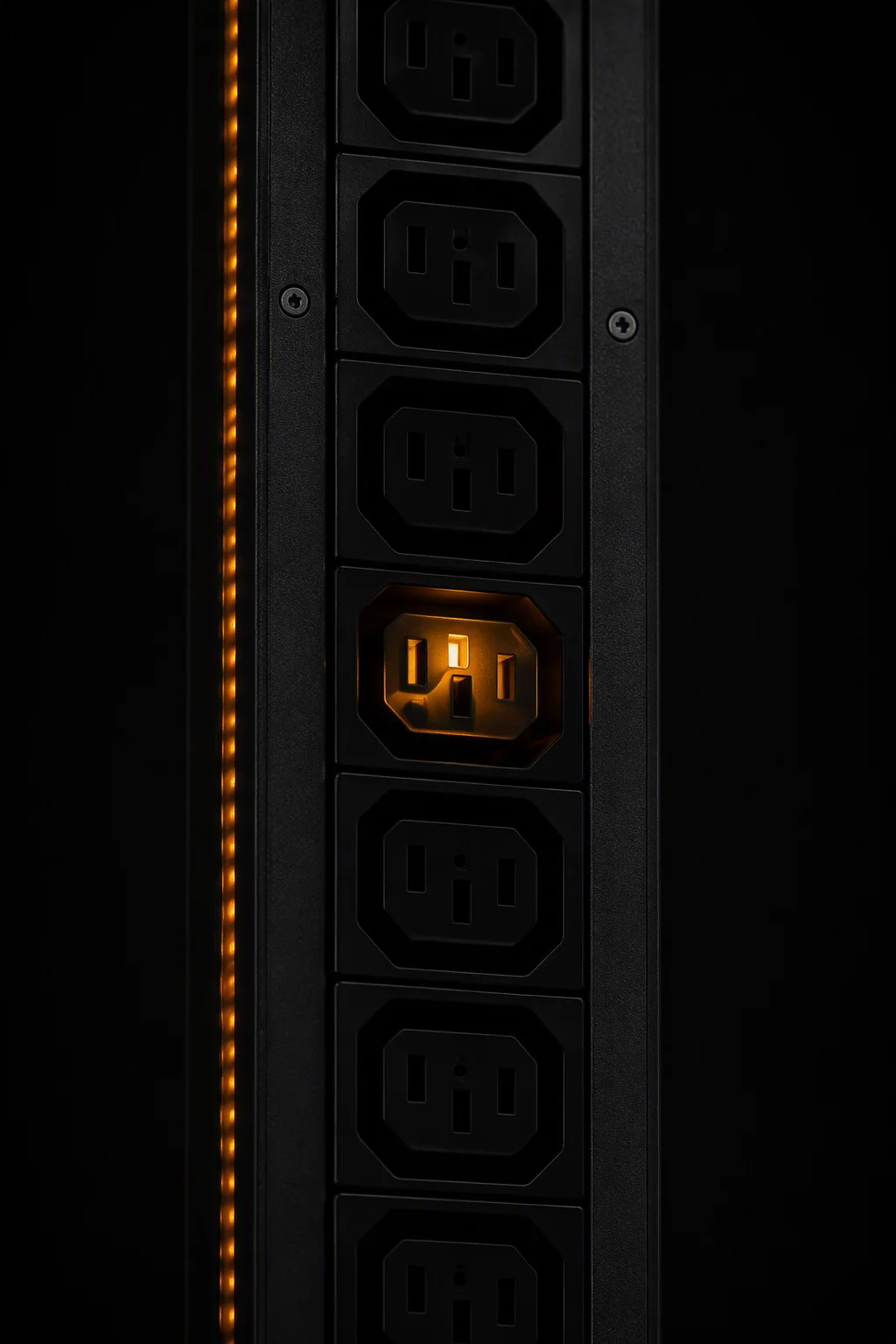
The hardware is built for the duty: per-outlet relays rated ≥100,000 mechanical cycles, 10kA breaking capacity behind 2.5mm² copper busbars, and hydraulic-magnetic breakers from 9-63A that stay predictable as rack temperatures swing. Locking C13/C19 outlets keep cords seated in high-vibration and hard-to-reach cabinets.
Engineering table
S-Series full specifications
| Parameter | Specification |
|---|---|
| Input plugs | IEC 60309 16A / 32A / 63A (6h clock keying); NEMA L5-30P, L6-30P, L21-30P |
| Input voltage | 100-127V / 200-240V single-phase; 208-240V / 346-415V three-phase WYE |
| Per-outlet relay | 16A rated, ≥100,000-cycle mechanical life |
| Breaking capacity | 10kA with 2.5mm² internal copper busbar |
| Sequencing | Programmable 0-999s delays per outlet or outlet group; profiles survive power loss |
| Remote actions | On / off / cycle per outlet, group or unit; IPMI and DCIM hooks |
| Branch protection | Hydraulic-magnetic breakers 9-63A per bank (temperature-insensitive tripping) |
| Outlets | IEC 60320 C13 (≤10A) and C19 (≤16A), locking optional; 8-32 typical, 48 max 0U |
| Metering | Input and per-phase V, A, kW, kWh, PF at ±1% (IEC 62053-21 class 1 basis) |
| Network | 10/100/1000Base-T; daisy-chain up to 8 units on a single IP |
| Protocols | SNMP v1/v2c/v3, HTTP(S), SSH, Modbus TCP, REST API |
| Environment sensors | 2 × RJ12 ports (temperature/humidity, door contact, water leak) |
| Mechanical | 0U vertical (full 48U length) or 1U horizontal, 19-inch racks |
| Certifications | UL 62368-1, IEC/EN 62368-1, CE, UKCA, RoHS, FCC Part 15 Class A |
| Factory test | 100% of units: functional test, 1500V AC hipot, 48-72h full-load burn-in |
Sequenced startup
Rack inrush, defused in four moves
Most startup trips are not steady-state overloads — they are several devices each drawing 3-5× rated current in the same millisecond. Sequencing spreads that spike across a window you control.
Map the inrush
List devices by surge draw and startup dependency — storage usually waits for compute, and both wait for network. We help assign outlet groups and delay slots so nothing fights for current at t=0.
Program the sequence
Set per-group delays from 0-999s in the Web UI or over SNMP. The profile lives in the PDU and survives power loss, so a dark site comes back in order without anyone on site.
Fire it
Trigger on schedule, on an SNMP command or manually per outlet. Each stage closes before the next opens, so the inrush never lands as one stacked spike that trips the 9-63A breakers.
Verify
Per-outlet state and live current confirm each stage drew load before the next fires — and the whole log exports for commissioning records or incident review.
FAQ
Switched PDU questions we actually get
Every per-outlet relay is rated for at least 100,000 mechanical cycles — roughly 270 on/off cycles per day for a year, per outlet. Behind them sit 10kA breaking contacts on 2.5mm² copper busbars, and each unit passes a 100% functional switching test before it leaves the line.
Yes — the usual trip is inrush stacking, not steady-state load. Delays of 0-999s stage each outlet group, and the hydraulic-magnetic breakers (9-63A) react to current rather than rack heat, so the protection curve stays where you set it even in a hot aisle.
That is the Switched + Outlet-Metered grade: per-outlet current at ±1% and kWh at ±2% on top of full per-outlet control. It shares the S-Series platform, so if you tell us the rack mix we will quote the combined build in the same 48-hour window.
Outlets hold their last commanded state and sequence profiles survive power loss. When the link returns, SNMP v3 and REST sessions resume as if nothing happened — the site stays configured and reachable even after a long upstream outage.
Count your truck rolls, then count the fix
If $600-1,200 site visits happen more than a couple of times a year, remote switching has already paid for itself. Send the rack list — an engineer replies with an S-Series spec and FOB quote within 48 hours, samples in 3-7 days for standard builds.