Industries · Crypto Mining & HPC
Every Watt Is a Line Item
When electricity takes 75-85% of operating cost and break-even sits near $0.07-0.08/kWh, metering error is margin. AmpRack rack PDUs give container and shelf operators per-outlet kWh at billing grade — plus the remote restarts that bring a stuck rig back to hashing without a walk down the row.
Published economics → rack hardware
Where mining economics and rack hardware meet
Mining profitability analysis is unusually public about its numbers, which makes the hardware conversation easier: every point below comes from operators' own published economics, and each one names the PDU feature that answers it.
| Operating pain | Published figure | AmpRack answer |
|---|---|---|
| Power owns the P&L | Electricity is 75-85% of mining opex (Simple Mining, 2026) | Billing-grade per-outlet kWh turns every shelf into its own profit-and-loss line instead of a share of one container meter |
| Margin lives below eight cents | Break-even power price runs $0.07-0.08/kWh; the best-sited operators contract closer to 2.7¢ | Calibration is the difference: ±1% metering on our units versus the unknown accuracy of commodity power strips |
| A hung rig burns watts for nothing | ASICs cost $2,000-17,000 each — and a wedged one still draws power while earning zero | Per-outlet remote restart restores hashrate in minutes, with current readback proving the rig re-drew load |
| Curtailment and demand response are recurring events | Crypto mining draws 0.6-2.3% of US electricity (EIA), so grid calls are a planning item, not a surprise | Group outlets into load blocks and shed or restore them with staged 0-999s timing — one command per block |
| Air is the silent killer | OEM guidance keeps ASIC intake below 90% relative humidity for reliability | Cabinet temperature and humidity probes with SNMP thresholds catch the trend before condensation or fan-choking risk |
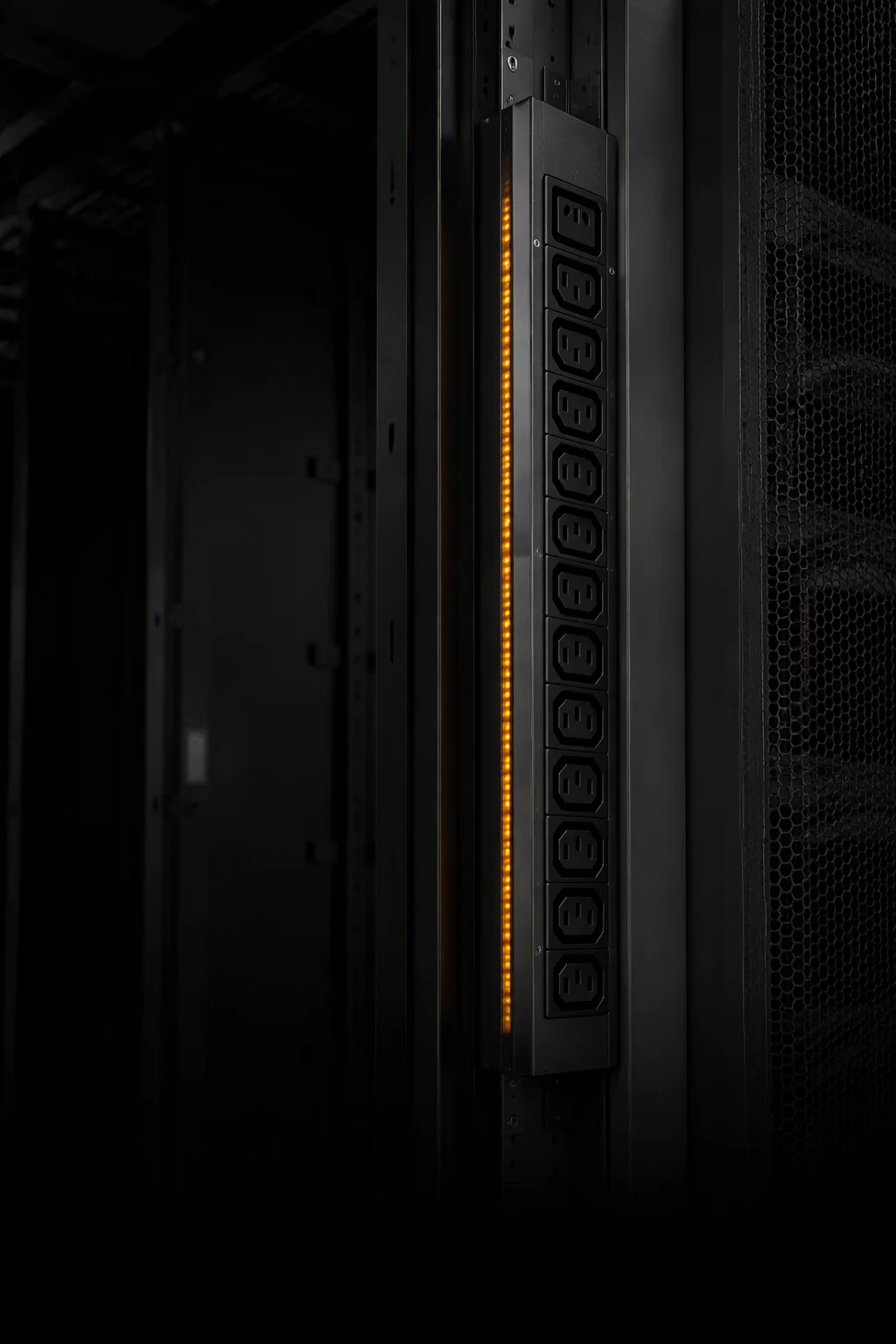
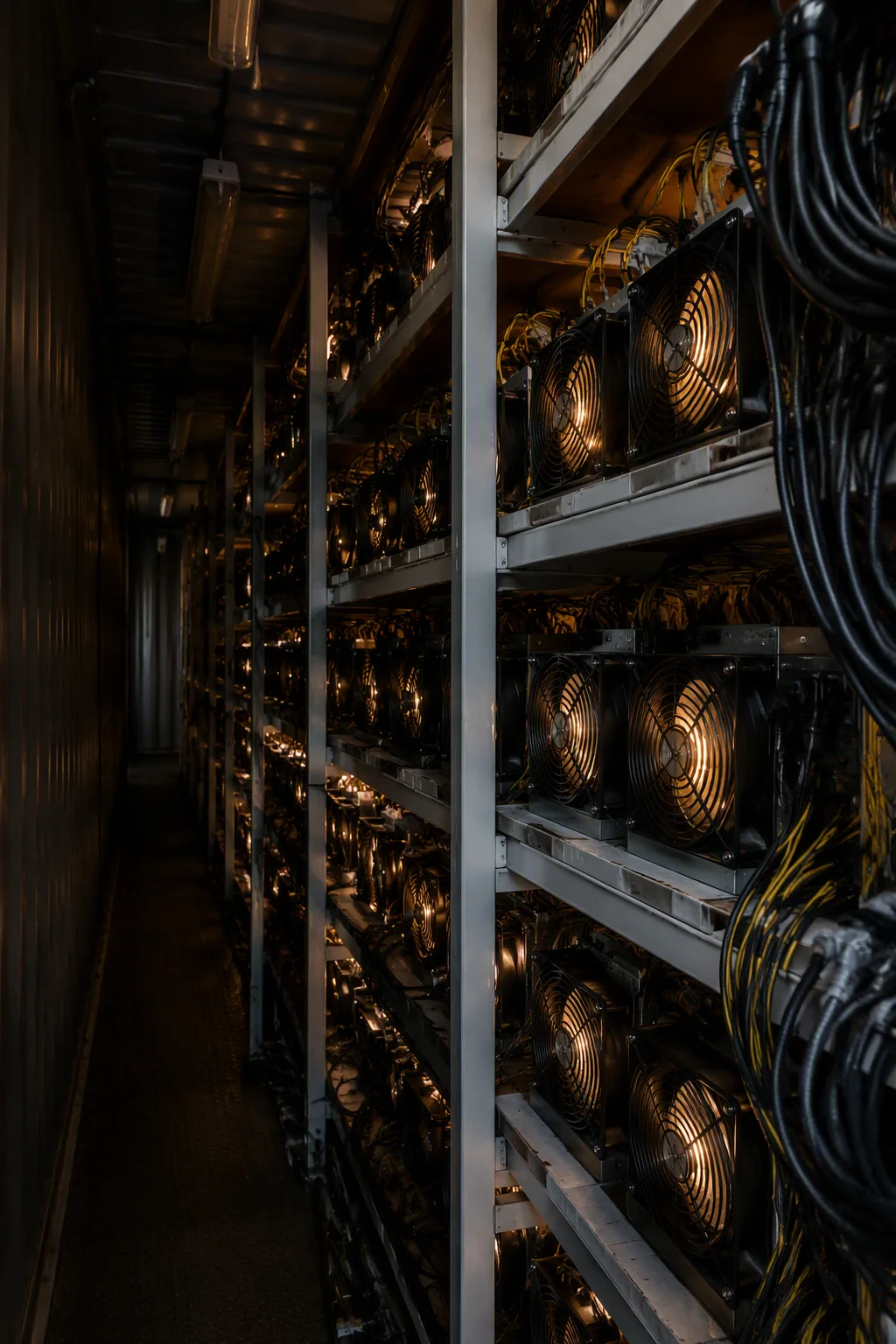
| Containers are dense and low-voltage | A single 63A three-phase feed carries a full shelf bank in a standard mining container | 0U verticals with up to 36 outlets, hydraulic-magnetic breakers in 9-63A ratings, keyway-matched IEC 60309 inputs |
| Fleet reports never reconcile with the utility bill | Site-level kWh from the meter rarely matches the sum of shelf estimates | Outlet totals roll up to per-unit and per-site summaries you can diff against the utility invoice — see the plug charts for the 60309 input options |
Per-rig accounting
Meter the shelf, not just the container
Dashboards that only see container-level power hide the expensive truth: shelves drift, power supplies age, and one rig can run hot on the meter while cold on the ledger. Outlet-metered units report kWh per rig with ±1% current and ±2% energy accuracy, frozen in 15-minute intervals you can join directly against pool earnings.
The switched twin of that ledger is the restart. When a hashboard wedges at 3 a.m., the profitable move is a hard power cut to one outlet while its neighbours keep hashing — exactly what per-outlet switching does remotely, with amps readback to confirm the rig re-drew load before you close the alert.
Deployed proof: a 2.4MW container operator reconciled outlet-level kWh against its utility meter and cut unexplained losses from 4.1% to under 1% within two billing cycles.
The economics, itemized
The economics your racks have to beat
share of mining opex that is electricity — Simple Mining profitability analysis, 2026
break-even power price per kWh around which 2026 economics pivot
of capital sitting in a single ASIC unit — one more reason a stuck rig is a ticket, not a shrug
relative humidity ceiling for ASIC intake air set by manufacturer reliability guidance
Send the container layout. We will rack it.
Shelf count, feed amperage and metering grade — an engineer returns a 0U vertical layout, a datasheet and a FOB quote within 48 hours.
Sources: Simple Mining 2026 profitability analysis (electricity 75-85% of opex; break-even $0.07-0.08/kWh); US Energy Information Administration (crypto mining at 0.6-2.3% of US electricity); Cipher Mining via Earthjustice (2.7¢/kWh contracted at a 207MW site); Sazmining ASIC cost data ($2,000-17,000 per unit); Hashrate Index facility-design guidance (RH below 90%).