Industries · Telecom & 5G Cabinets
Unmanned Sites, Power You Can Reach
A telecom truck roll runs $150-500 before the after-hours multiplier, and travel alone eats 2-6 hours of MTTR. SNMP-addressable rack power lets your existing NMS cycle a stuttering cabinet from the operations center — the same buying logic that already pays around $700 for a site RTU.
Field reality → cabinet hardware
What unmanned cabinets demand from a PDU
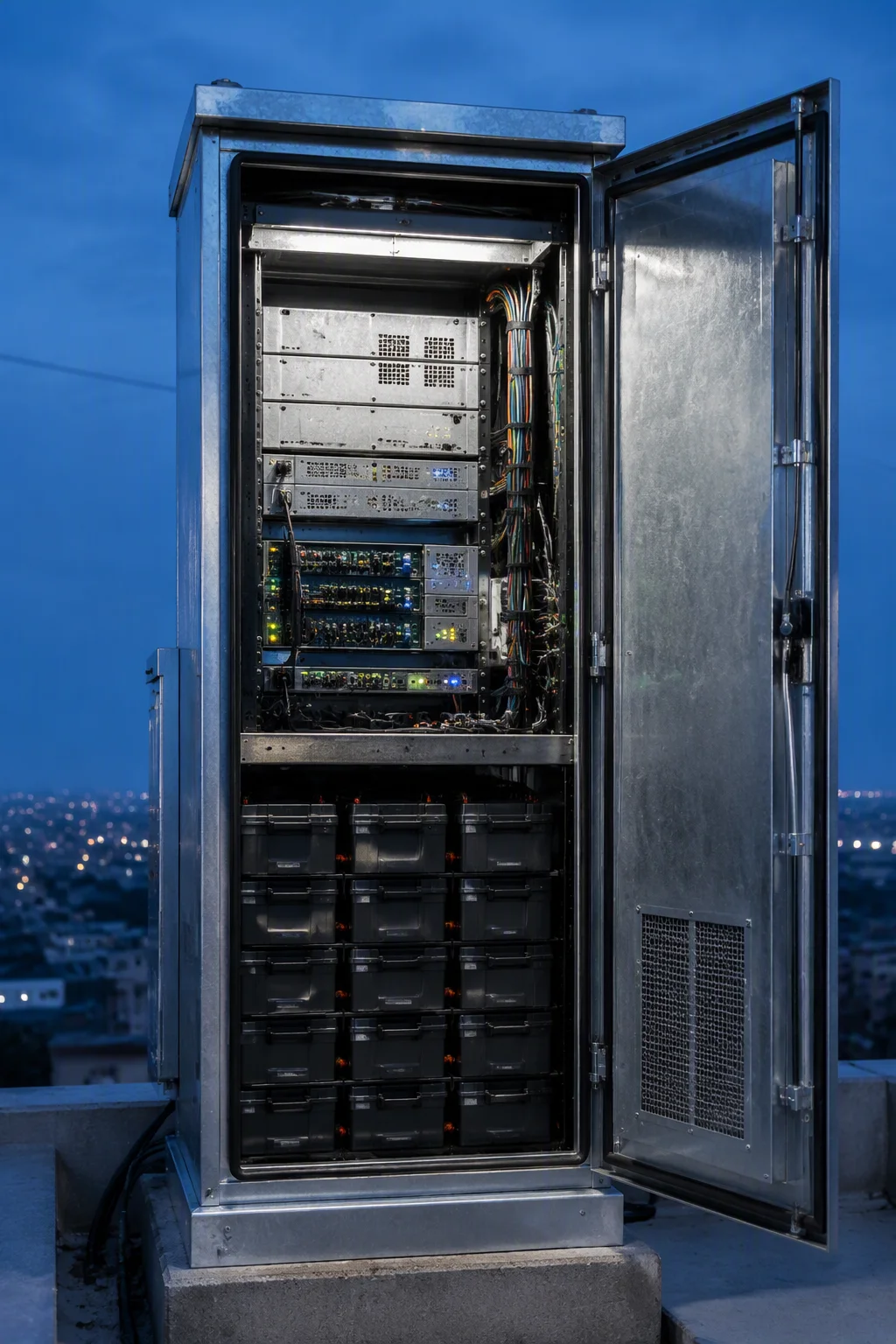
Telecom operators were the first industry to pay for remote monitoring — the RTU market exists because driving to sites is expensive. A switched PDU follows the same logic at the power layer, and the environmental requirements come straight from the NEBS and ETSI books your cabinets are already built to.
| Operating pain | Cost reference | AmpRack answer |
|---|---|---|
| Distance turns faults into expeditions | Telecom truck rolls typically cost $150-500, with night and weather callouts at multiples; travel consumes 2-6 hours of MTTR | Per-outlet switching over SNMP v3 puts the reboot inside the NMS instead of at the end of a road |
| The monitoring budget already exists | Operators pay about $700 per RTU and $2,000-5,000 per site for monitoring (DPS Telecom list pricing) | An intelligent PDU lands in the same line item and answers the same manager — no new software, no new console |
| Cabinets bake in summer and freeze in winter | NEBS GR-63/GR-1089 and ETSI EN 300 019 outdoor classes define what survives outside | Wide-temperature build option rated -20 to +60°C, convection-cooled with no fans or filters to service |
| DC and AC share the same cabinet | -48V plants run the transport gear while rectifier and auxiliary loads stay on AC | The PDU owns the AC side cleanly — rectifier inputs, aux equipment — and reports north-bound like any other element |
| Blackouts leave sites dark after power returns | Restored mains does not guarantee restored equipment; a pending manual restart keeps the site off air | Programmable restore policy with staged 0-999s starts, plus per-outlet current readback that proves recovery happened |
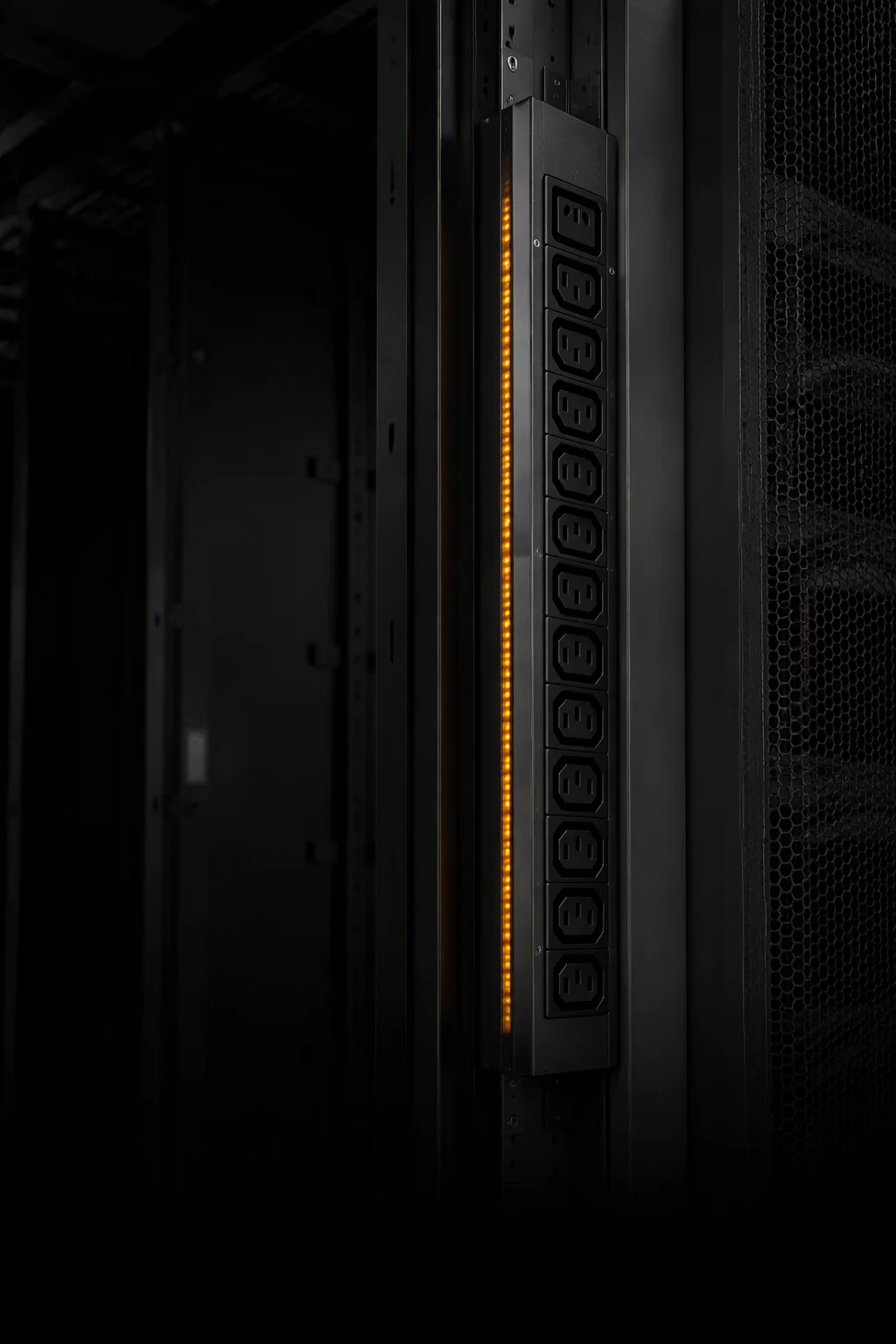
| Street cabinets have no depth to spare | Shallow cabinets rule out deep 1U chassis entirely | 0U vertical mounting with 8-24 outlets hugs the frame rail — fit guidance in the selection guides |
| Energy per site needs evidence, not estimates | ±1% inlet metering per site replaces clipboard readings across hundreds of cabinets | Inlet kWh logs export on schedule for energy accounting, regulator reporting and tenant-style cost splits |
The 3 a.m. ticket
Close the power ticket from the chair
Telecom operations already run on thresholds and traps; power deserves the same treatment. A switched PDU appears in the NMS as addressable outlets with live amps, so the on-call engineer cycles the sticky radio unit, watches current return on the readback and closes the ticket without starting a vehicle.
The hardware side has to survive where it mounts. The wide-temperature option runs from -20 to +60°C without fans, 0U verticals fit shallow street cabinets, and every unit leaves the factory through the same 100% functional and hipot testing as our data center lines.
Rollout result: a regional WISP spanning 120 cabinet sites moved power-cycling to its on-call desk over SNMP and cut after-hours dispatches by roughly 80% within six months.
Questions from the NOC
Three questions network operations teams ask first
The wide-temperature option is rated -20 to +60°C with convection cooling — no fans, no filters, nothing to service on a hillside. Derating above 40°C is documented on the datasheet so breakers and feeds can be sized honestly for the worst month, not the average one.
Cleanly and separately: the PDU distributes and meters the AC side — rectifier inputs and auxiliary equipment — while its alarms feed your manager over SNMP v3 exactly like the DC plant controllers do. One NMS view covers both power domains without bridging hardware.
No. It answers SNMP v1/v2c/v3 with our MIB files, exposes a REST API and speaks Modbus TCP where SCADA prefers it. If your NMS already manages an RTU, it can manage this PDU — the purchase logic is the same $700-line-item budget you already approved.
Roll out power you never have to visit.
Site count, cabinet depth and feed size — an engineer replies with a 0U or 1U proposal, wide-temp options and a FOB quote within 48 hours.
Sources: DPS Telecom published pricing (RTU around $700 per unit; $2,000-5,000 per site for monitoring deployment); telecom industry truck-roll cost ranges ($150-500 typical, up to $100-1,000+ across sources) and remote-site MTTR travel share (2-6 hours); NEBS GR-63/GR-1089 and ETSI EN 300 019 environmental classes as design references.