Every figure a design file needs
Input and output from 10A to 32A at 110V to 250V AC and 50Hz to 60Hz. Metering reads from 90V to 350V with a 1V scale, at ±1% plus one digit.
- Input / output
- 10A–32A
- Operating voltage
- 110V–250V
- Frequency
- 50Hz–60Hz
- Meter accuracy
- ±1%
- Groups
- 3
 Master parameter list
One table, every published figure
Each row states the parameter, the value a design file should carry, and the document or group it belongs to. Values marked as a scale are the resolution the on-board meter reports at, not a tolerance.
| Parameter | Value | Note | Group |
|---|---|---|---|
| Input and output current | 10A–32A | Or 10A–16A depending on the series | Electrical |
| Operating voltage | 110V~250V AC | Single-phase and three-phase builds | Electrical |
| Operating frequency | 50Hz~60Hz | Either nominal frequency | Electrical |
| Wide-range input | 180–265V | With surge and lightning protection | Electrical |
| Metering input range | 90V~350V | Scale 1V | Electrical |
| Voltage accuracy | ±1%+1 digit | Of reading, plus one least significant digit | Electrical |
| Current accuracy | ±1%+1 digit | Total current, scale 0.1A | Electrical |
| Power accuracy | ±1% | Applies to the power reading as well | Electrical |
| Energy metering grade | 1 grade | Scale 0.1 kWh | Electrical |
| Enclosure | Cold-rolled steel | Brushed face, 0U and 1U mounting | Mechanical |
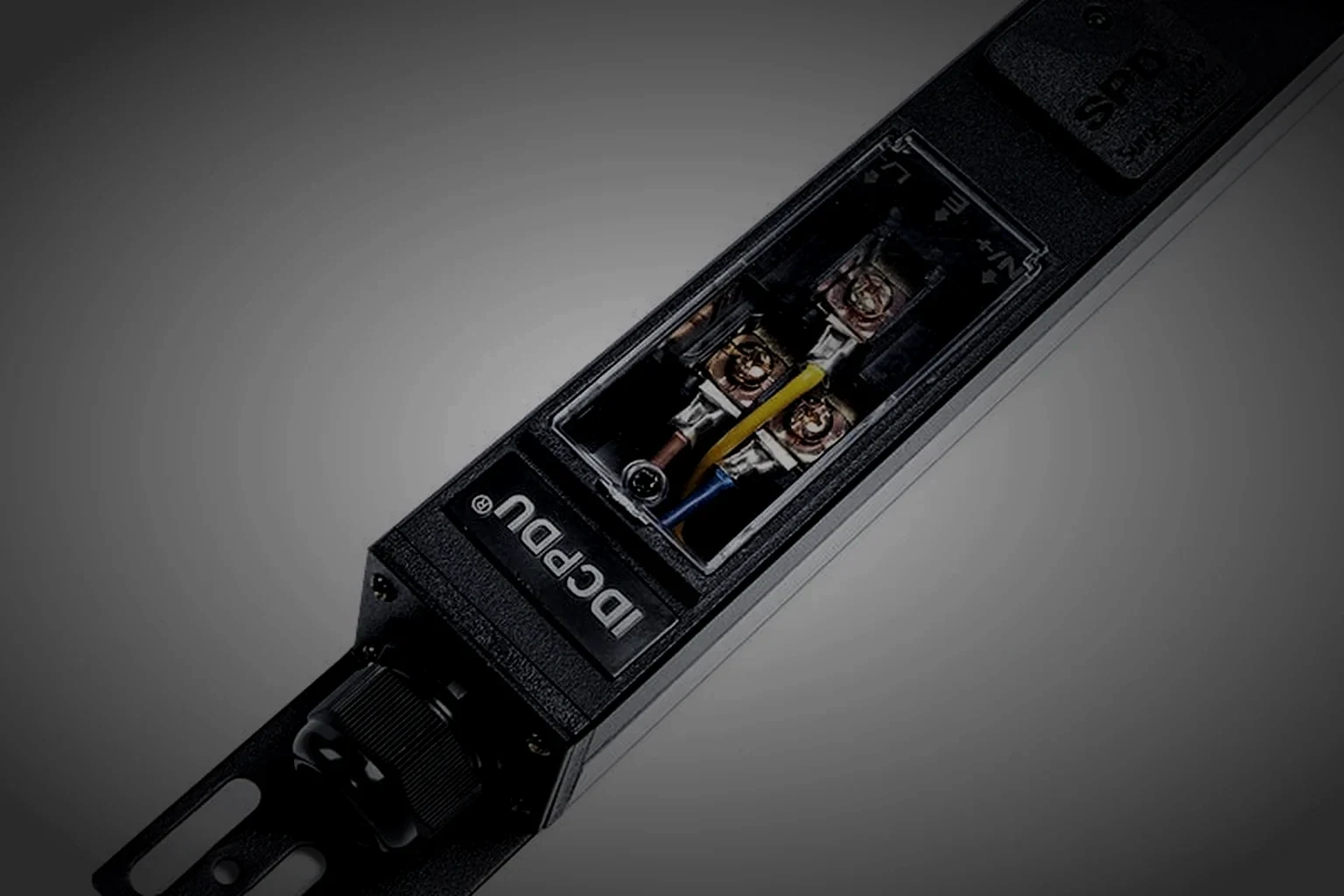
| Internal conductors | VDE 2.5mm² / 6mm² | ; busbar connections | Wiring |
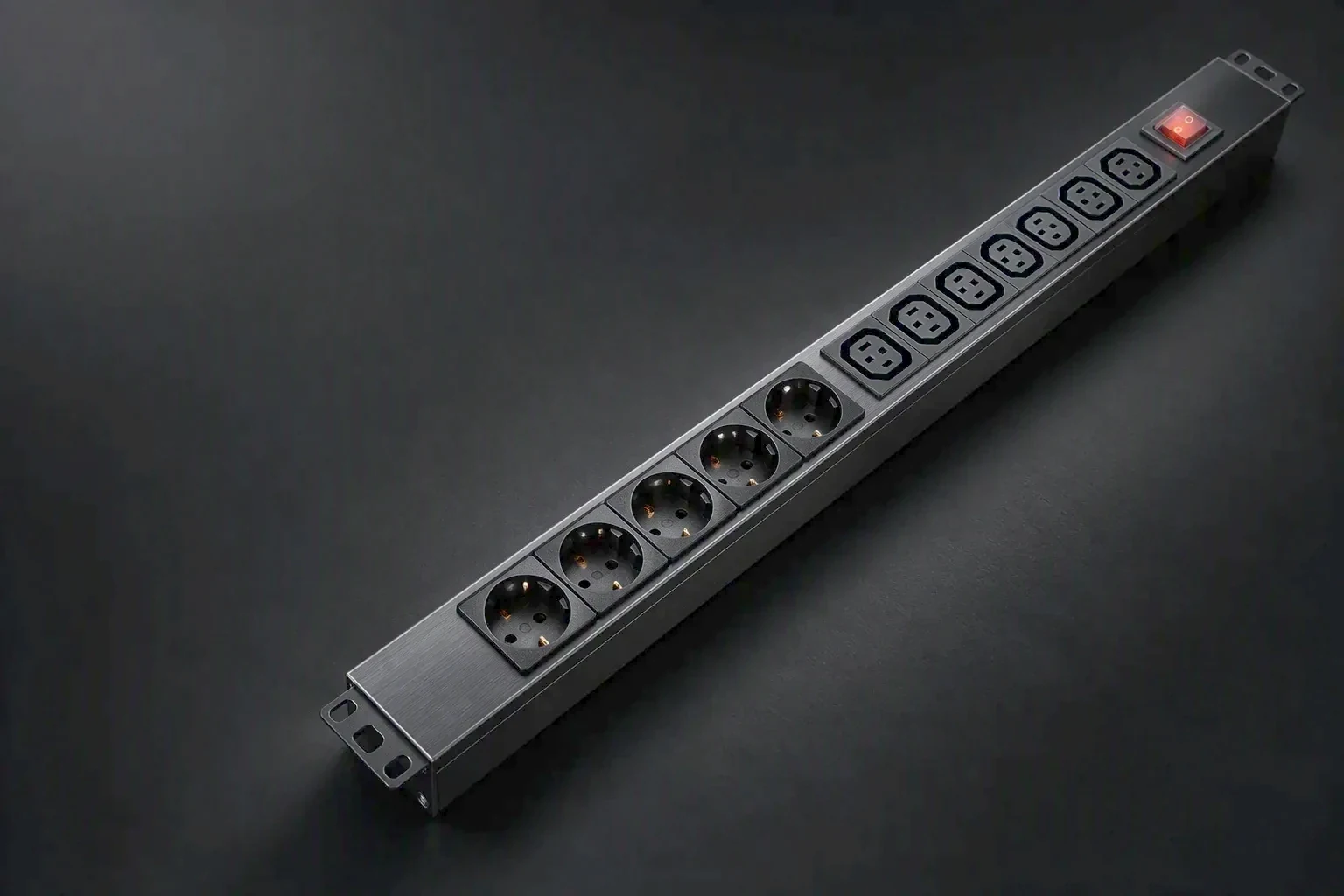
| Outlet example | C13 × 36 + C19 × 4 | Order and count follow the drawing | Mechanical |
| Communication | Ethernet × 1 + RS485 × 1 | 10/100M, SNMP and Modbus, embedded web server | Electrical |
| Local display | Industrial OLED | IP, current, voltage, power, energy, main switch state | Electrical |
 How to read the accuracy
±1% plus one digit
The percentage applies to the reading, and the digit is one count of the last displayed place. At a 0.1A scale on a 16A line, the digit term is 0.1A.
- Reading term±1% of value
- Digit term1 count
- Current scale0.1A
- Voltage scale1V
- Energy scale0.1 kWh
 Where the figures come from
Measured, then recorded
- Units tested100%
- ContinuityPer line
- InsulationPer unit
- Metering checkAgainst a reference
 Three groups
Which group answers which question
The parameters are split by the drawing they affect: the electrical group sizes the feed, the mechanical group sizes the rack space, and the wiring group covers what is inside the chassis.
 Group 01
Electrical
Current, voltage, frequency, protection and every metering scale the on-board meter reports at.
- Current10A–32A
- Voltage110V–250V AC
- Meter range90V–350V
Group 02
Mechanical & enclosure
Chassis, mounting orientation, outlet order and the hardware that holds the unit in the rack.
- Mounting0U / 1U
- EnclosureCold-rolled steel
- Outlet exampleC13 × 36 + C19 × 4
 Group 03
Wiring & conductors
Conductor sizes, busbar joints, torque practice and the thermal margin behind the current rating.
- ConductorsVDE 2.5 / 6mm²
- JointsBusbar
Metering chain
From the shunt to the reporting line
The metering path is fixed before the outlet order is drawn. A current transformer or shunt feeds the meter, the meter scales the reading, and the reporting line publishes it to the network interface. The accuracy figure belongs to the whole path, not to a single component.
- Metering input
- 90V~350V
- Voltage scale
- 1V
- Total current scale
- 0.1A
- Power accuracy
- ±1%
- Energy grade
- 1 grade
- Energy scale
- 0.1 kWh
 What leaves the unit
Reporting lines and their formats
Six numbers leave a metered unit. Each one is published on a fixed scale, over one of two protocols, and mirrored on the local display so a technician standing at the rack sees the same value.
Current per line
0.1A
Scale of the total current reading, at ±1% plus one digit.
Voltage
1V
Scale across a metering input range of 90V to 350V.
Power
±1%
Same percentage as current and voltage, reported per feed.
Energy
0.1kWh
Energy total at 1 grade, which is the scale a billing line is written against.
Protocols
2ways
SNMP and Modbus over 10/100M Ethernet or RS485, with an embedded web server.
Reference check
100%
Metering readings compared against a reference on every unit before dispatch.
 Specification flow
How a specification becomes a unit
Five stages, in order. Each stage ends in a document, and the document is what the next stage is built against — so a change is always traceable to the revision that carried it.
Parameter sheet
The four lines of electrical data are written down: outlet combination, current per feed, metering depth and whether remote switching is required.
Specification match
Each line is matched against the published figures above. Where a request falls outside them, it is flagged before a drawing is started rather than after.
Outline drawing
Chassis, mounting orientation, outlet order and entry position are drawn by unit. The revision is confirmed in writing before production.
Build and first article
The first unit of a series is built and compared against the drawing: dimensions, outlet order and metering lines, before the run continues.
Test and record
The unit is powered and tested for continuity, polarity, insulation and function, and the metering readings are recorded per line.
Dispatch pack
Drawing revision, specification sheet and test record travel together, so the document set matches the unit that arrives.
Specification request
Send the four lines, get the per-line sheet
Outlet combination, current per feed, metering depth and remote switching. The reply is a configured quotation with a specification sheet written per reporting line.
Reply within 12 hours on working days · no lead time or minimum quantity figure is published on this site.