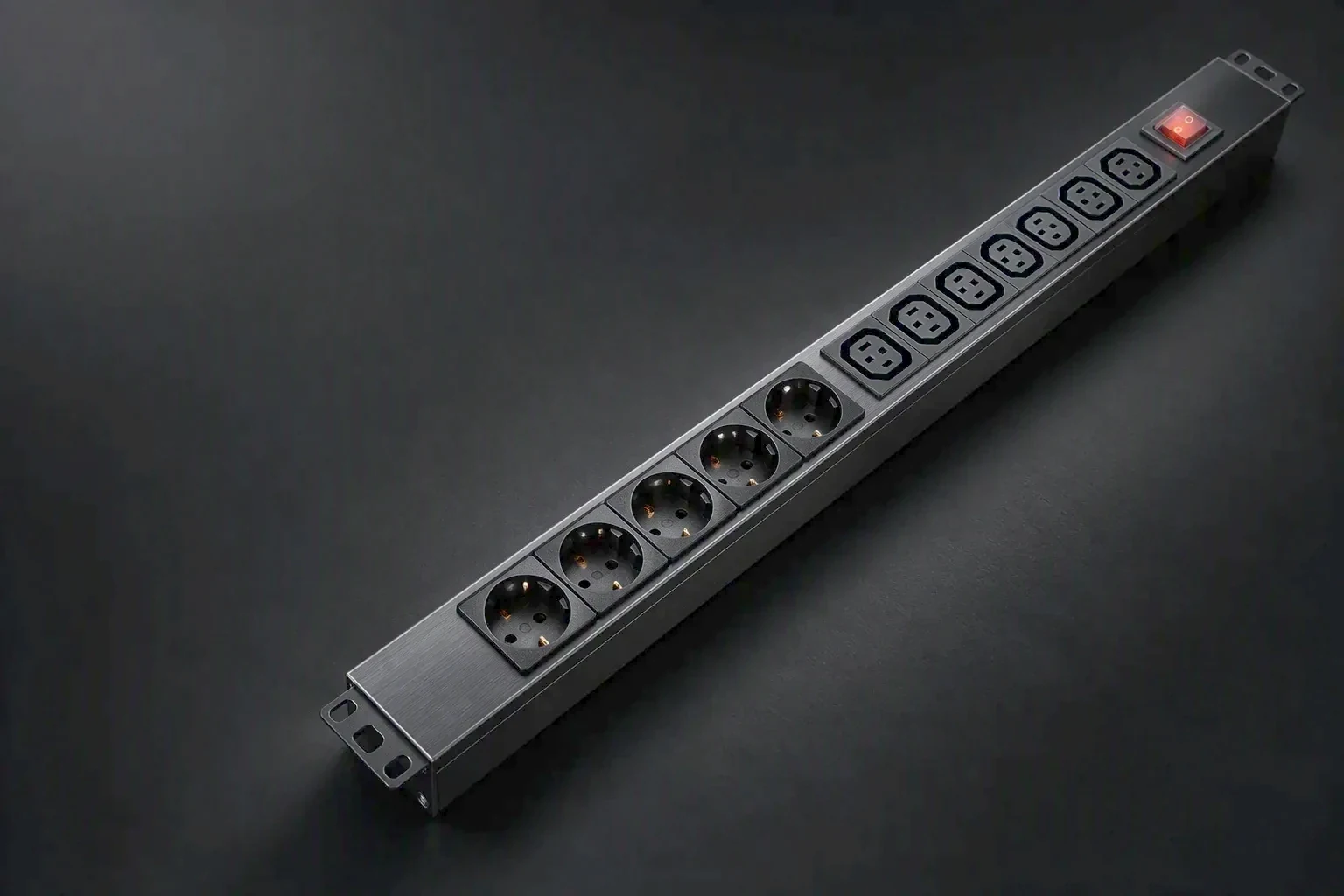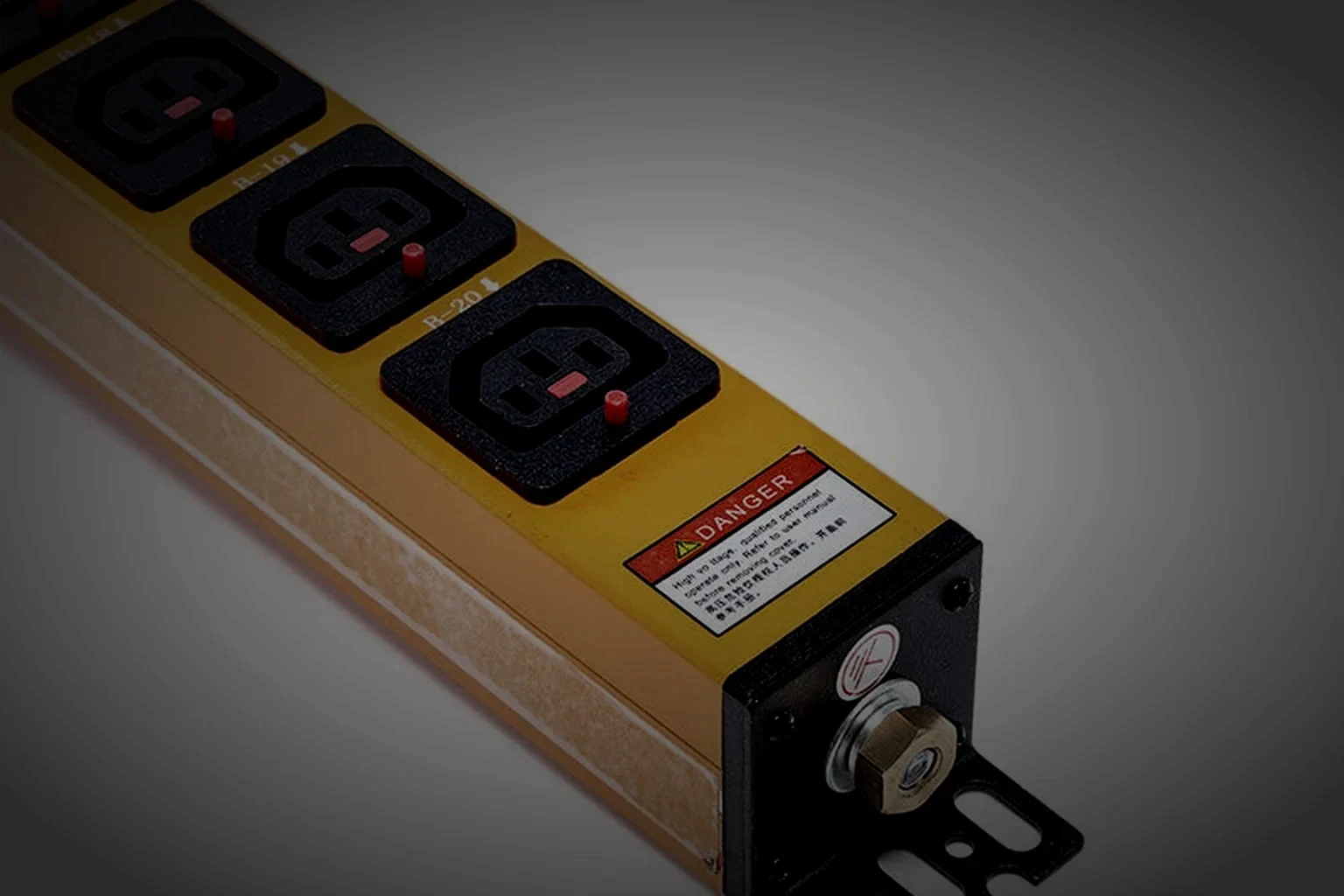
Monitoring and remote management
Every reporting line on an IDCPDU rack PDU carries a meter, 10/100M Ethernet and RS485. Readings leave over SNMP or Modbus, on an embedded web page, and on the OLED at the rack.
- Interface
- 10/100M × 1 + RS485 × 1
- Protocols
- SNMP · Modbus
- Local display
- Industrial OLED
- Metering
- ±1% · 1 grade
- Event storage
- up to 20,000 entries
 Published values
The monitoring parameter set
One row per parameter, so a monitoring scope can be written into a design file from top to bottom. Every value below is a published figure for the series, not an option list.
| Parameter | Value |
|---|---|
| Network interface | 10/100M Ethernet × 1 |
| Serial interface | RS485 × 1 |
| Protocols | SNMP · Modbus |
| Local display | Industrial OLED |
| Display lines | IP · current · voltage · power · energy · main switch state |
| Meter input window | 90V ~ 350V, scale 1V |
| Current scale | 0.1A |
| Metering accuracy | ±1% + 1 digit |
| Power accuracy | ±1% per feed |
| Energy total | 1 grade, scale 0.1 kWh |
| Alarm path | SMTP message on a threshold crossing |
| Event storage | up to 20,000 entries, RTC held through power loss |
| Ambient sensor | -30°C ~ 100°C at 1°C · humidity 1% ~ 99% |
| Operating band | 110V ~ 250V AC · 50Hz ~ 60Hz |
| Remote switching | per outlet or per group, over the same interface |
 Interface
Ethernet and RS485 on one board
Both ports publish the same meter data, so a DCIM poll and a local tool can read the rack at the same time.
- Ethernet10/100M × 1
- SerialRS485 × 1
- SNMPYes
- ModbusYes
- Web serverEmbedded
 Metering
Scales on the reporting line
- Voltage window90V ~ 350V
- Voltage scale1V
- Current scale0.1A
- Accuracy±1% + 1 digit
- Energy scale0.1 kWh
- Energy grade1
 Which path fits the rack
Choosing the monitoring path
The paths answer different questions. A rack that is already polled by a platform, a rack nobody watches on a dashboard, and a rack that has to be reconstructed after a fault do not need the same depth.
SNMP and Modbus integration
For a rack that is already polled: the meter values leave as traps and registers and land in the platform in use.
- Ethernet × 1 · RS485 × 1
- Traps · registers
- Read-only on values
Embedded web server and OLED
For a technician standing at the rack: the address, current and switch state are on the display, and the page needs nothing installed on a host.
- OLED · IPv4 on the display
- Embedded web server
- No agent on a host

Threshold alerts and SMTP
For a hall with nobody on the dashboard: the line raises the message itself when a value crosses the set point.
- SMTP on threshold
- Settable per line
- Entry written at the crossing

Event log and RTC
For a fault that has to be reconstructed: the entry carries a date from the RTC and survives the power cut that caused it.
- Up to 20,000 entries
- RTC held through power loss
- Read over Ethernet or RS485
 Metering depth
A feed total and the outlet totals, from one board
A feed total and the outlet totals are written by the same board, so a rack can be billed per feed and audited per outlet without a second device. Both read at ±1% plus one digit, and the energy total is kept at 1 grade.
- Feed total
- ±1% + 1 digit
- Outlet total
- per outlet, on switched builds
- Energy total
- 1 grade · 0.1 kWh
- Voltage reading
- 90V ~ 350V · 1V
- Current reading
- 0.1A scale
 Register grid
What the readout reports
Each cell is a reading on the reporting line: the item, the value it is published at, and where it can be read from.
Voltage1V
Input window 90V to 350V, line and phase on three-phase builds
Current0.1A
Total per feed, ±1% plus one digit
 Power±1%
Active power per feed, at the same accuracy as current
Energy1grade
Billing-grade total at a 0.1 kWh scale
 Temperature1°C
Optional sensor over -30°C to 100°C, at the inlet or the rack front
Humidity1%
Optional sensor covering 1% to 99%, reported beside temperature
 Main switchOn/off
Shown on the local display, so a technician reads it without a browser
AddressIPv4
Current address on the display, which shortens a service visit
One reading, several surfaces
The display, the page, the trap and the register
A sample is written once and read in several places, so a screen standing at the rack, a dashboard on the network and a billing export carry the same number. Only the reading path changes.
Local displayOLED
Address, current, voltage, power, energy and main switch state
Web pageNo agent
Served from the monitoring board to a browser on the same network
SNMPTrap
Sent when a value crosses the threshold set for that line
ModbusRegisters
Read over RS485, or over TCP on the Ethernet port
 Request a quote
Send the rack lines, get the configured quotation
Outlet combination, current per feed, metering depth and remote switching. The reply is a configured quotation with a per-line specification sheet, in English.
Reply within 12 hours on working days. No lead time and no minimum quantity figure is published on this site.