Electrical specifications
Metering input from 90V to 350V at a 1V scale. Total current at a 0.1A scale. Both read at ±1% plus one digit, and the energy total is kept at 1 grade.
- Meter input
- 90V–350V
- Voltage scale
- 1V
- Current scale
- 0.1A
- Accuracy
- ±1%+1 digit
- Energy grade
- 1
 Line by line
The electrical parameter set
Two columns, one row per parameter, so a design file can be filled from top to bottom without reading prose. Every value here is a published figure.
- Input current
- 10A–32A
- Output current
- 10A–16A
- Operating voltage
- 110V~250V AC
- Wide-range input
- 180–265V
- Operating frequency
- 50Hz~60Hz
- Metering input range
- 90V~350V
- Voltage scale
- 1V
- Total current scale
- 0.1A
- Voltage accuracy
- ±1%+1 digit
- Current accuracy
- ±1%+1 digit
- Power accuracy
- ±1%
- Energy grade
- 1 grade
- Energy scale
- 0.1 kWh
- Surge protection
- Fitted on the wide-range input
- Rated example
- AC 415V, 20 × 20A
- Interface
- 10/100M Ethernet × 1 + RS485 × 1
- Protocols
- SNMP · Modbus · embedded web server
- Alarm output
- SMTP on threshold
- Ambient sensor range
- -30°C~100°C, 1°C resolution
- Humidity monitoring
- 1%~99%
 Protection
Two layers on the input
The wide-range input carries surge and lightning protection. Overcurrent protection is by breaker or hydraulic-magnetic device, depending on the series.
- SurgeFitted
- OvercurrentBreaker or hydraulic
- Input window180–265V
- Frequency50Hz–60Hz
 Reporting
Two ports, two protocols
- Ethernet10/100M × 1
- SerialRS485 × 1
- SNMPYes
- ModbusYes
- Web serverEmbedded
 From requirement to mechanism
Why a 90V to 350V meter window matters
A metering front end sized for a nominal 230V line loses its reading on a sag, and an under-range front end clips on a three-phase 415V build. A 90V to 350V window keeps the reading in range on both, at a 1V scale, so the same reporting line is usable across the range without a second part number.
- Window low end
- 90V
- Window high end
- 350V
- Scale inside the window
- 1V
- Typical operating band
- 110V~250V AC
- Wide-range input band
- 180–265V
- Rated example
- AC 415V
 Meter row
One row per meter
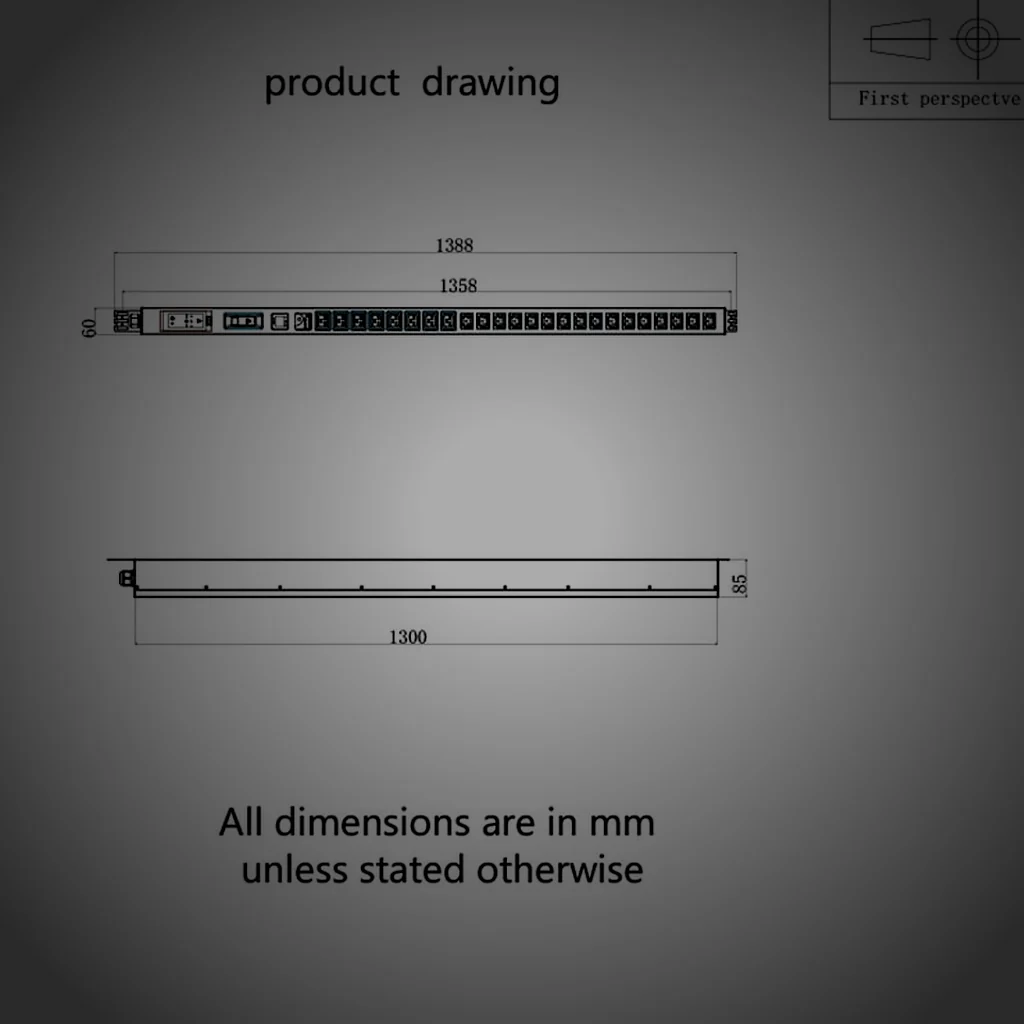
Each row is a meter on the unit: what it reads, the value it reports, the scale it reports at, and where the reading can be taken from. The on-board display and the network interface publish the same number.
 Electrical release path
From the electrical request to the test record
Three stages, in order. Each one ends in a document, and the document is the input to the next stage — so an electrical change is always traceable to the revision that carried it.
Electrical request
Current per feed, operating voltage, frequency and metering depth are written down. Protection type is chosen here, not at the drawing stage.
Range check
The request is checked against the published bands: 10A to 32A, 110V to 250V AC, 50Hz to 60Hz and the 90V to 350V meter window.
Test record
Continuity, polarity, insulation and function are tested on every unit, and the metering readings are compared against a reference and recorded per line.
Electrical request
Send the electrical lines, get the sheet
Current per feed and metering depth are the two lines that fix the electrical build. Add the outlet combination and the switching scope, and the reply carries a specification sheet per reporting line.
Reply within 12 hours on working days · no lead time or minimum quantity figure is published on this site.